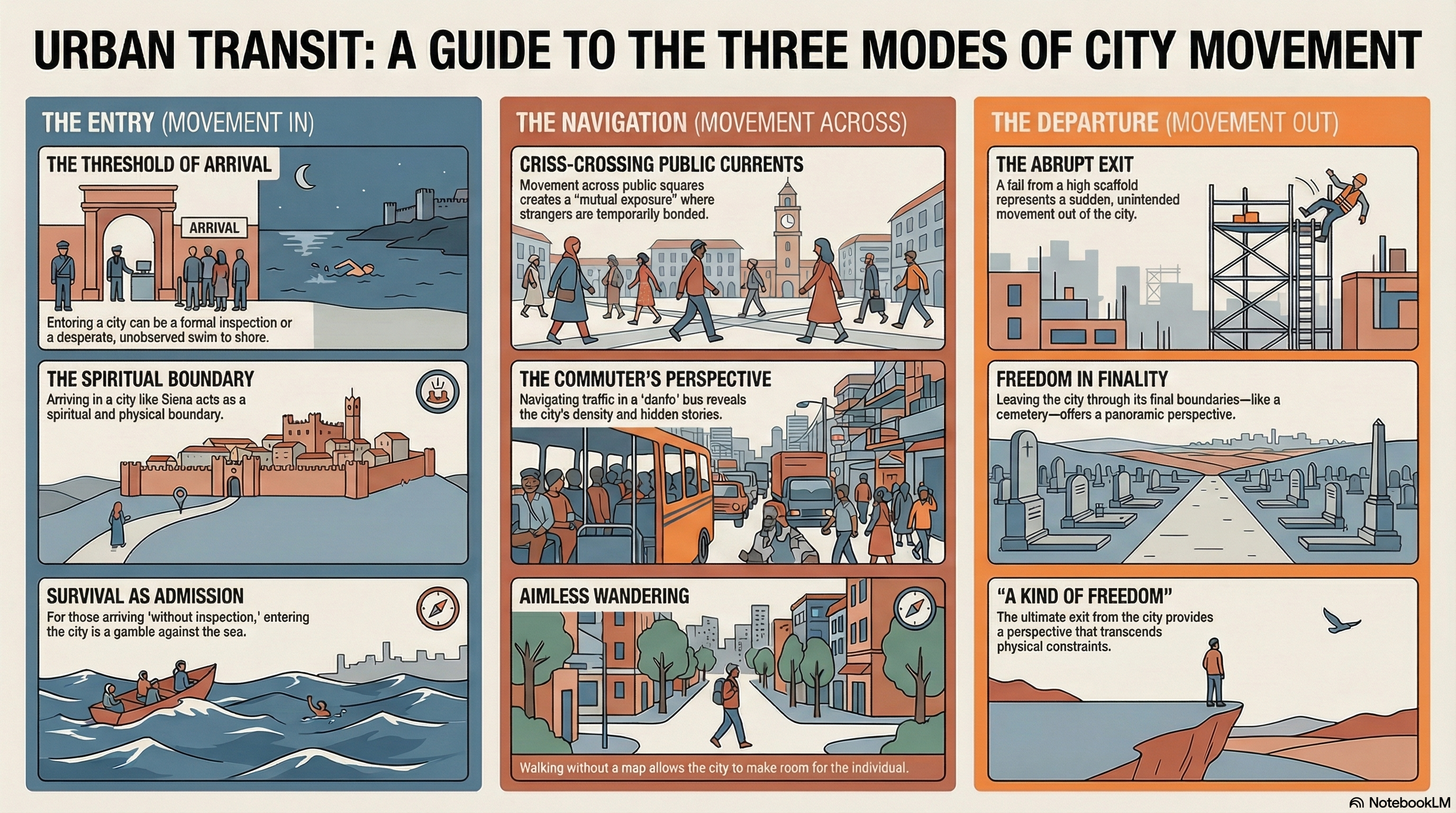
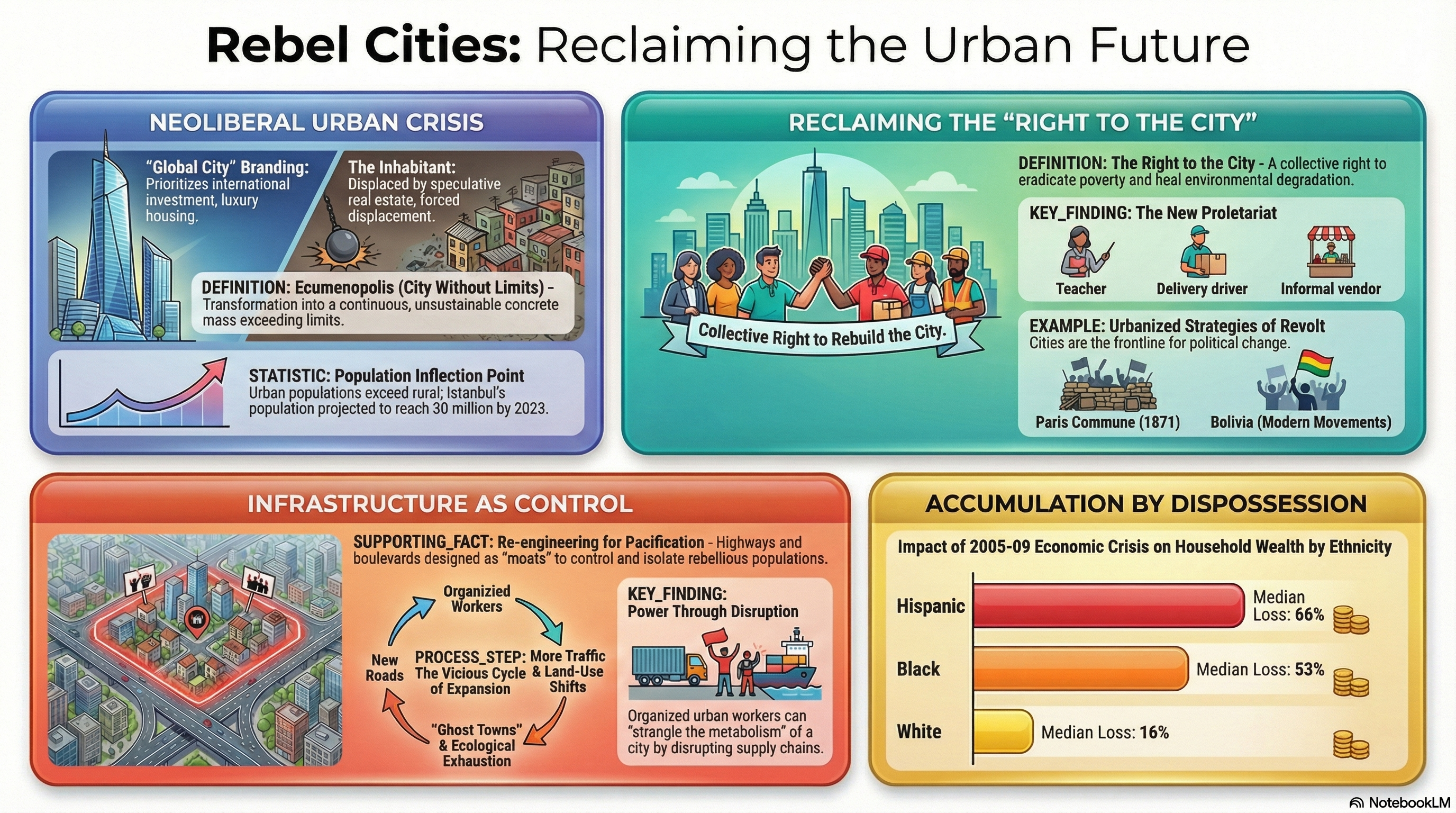
For our final week, we analyze the spatial politics of the city, focusing on the forces of capital, the commodification of place, and the radical potential of urban rebellion.
1. The Rebel City
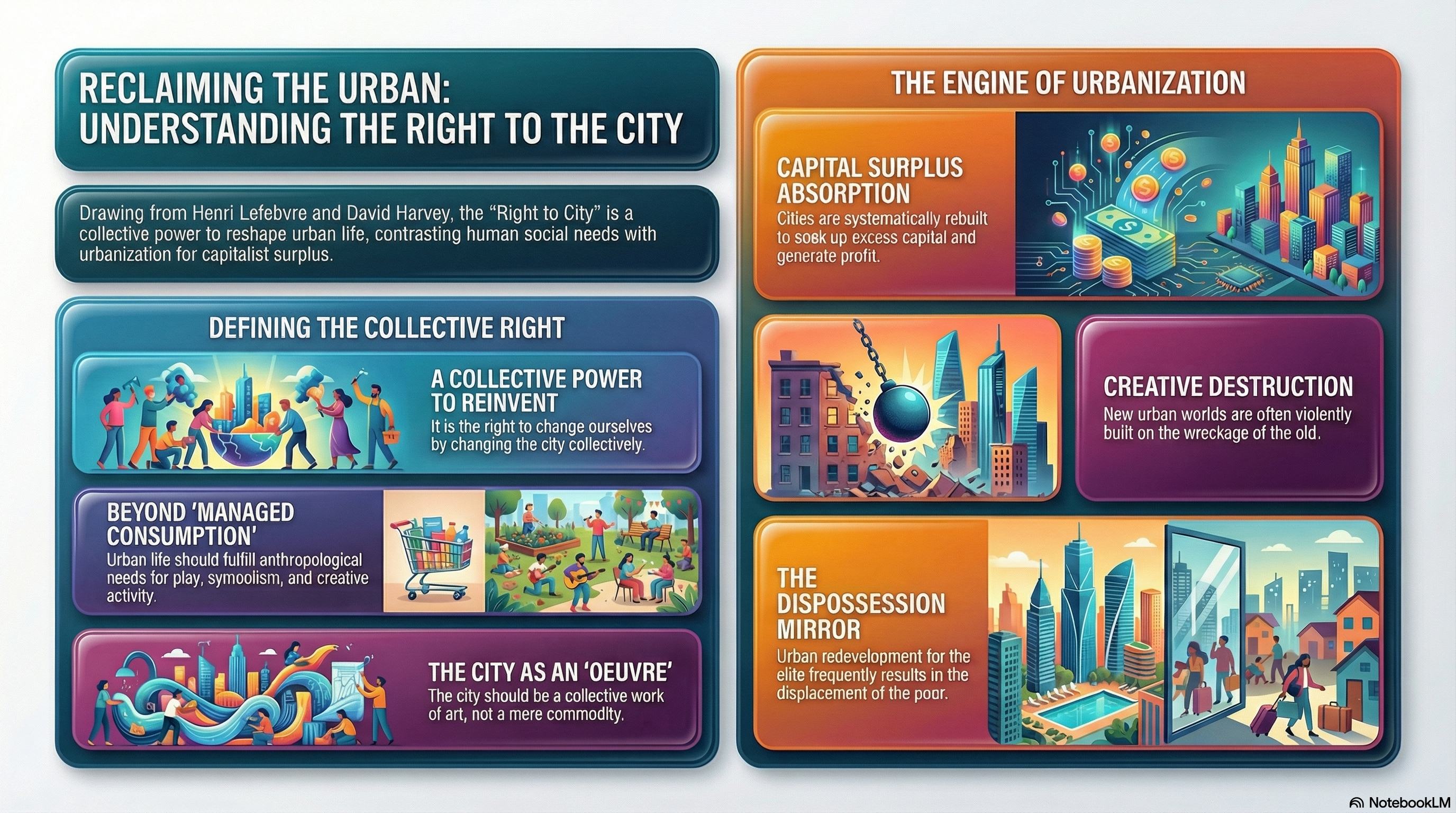
David Harvey argues that the city must be reclaimed as a site for anti-capitalist struggle. He explores how "feral capitalism" and rapid urbanization serve the interests of wealth accumulation rather than human flourishing. True freedom, he posits, begins when communities organize to overcome class domination and assert democratic control over their urban environments.
2. Tourism as Secondary Colonialism
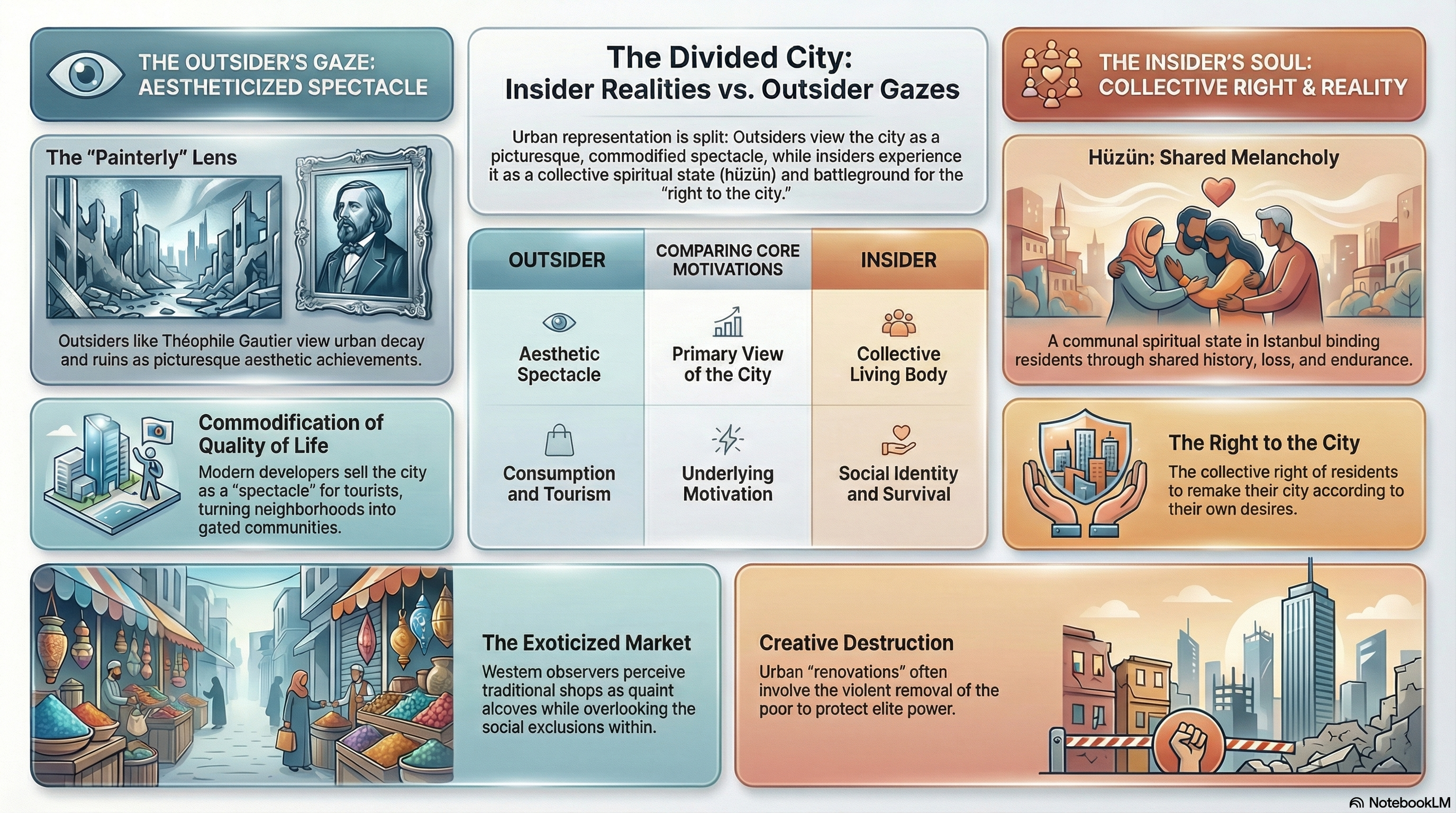
Jamaica Kincaid's A Small Place provides a searing critique of tourism in Antigua. She introduces the concept of "secondary colonialism," where wealthy Westerners convert poorer, formerly colonized nations into objects of leisure. The tourist's pursuit of pleasure relies on an enforced blindness to the banality of their own lives and the historical trauma and enduring poverty of the local population.
3. The City Without Limits
Echoing Harvey's critique, the documentary Ecumenopolis explores the devastating human cost of Istanbul's relentless, profit-driven expansion. It emphasizes that real growth cannot be measured merely by per capita income, but by how resources are distributed, making the protection of lived environments a primary act of resistance.
Key Themes:
- Anti-Capitalist Urbanism: Organizing cities beyond the constraints of the market.
- The Tourist's Gaze: The conversion of colonized spaces into playgrounds for the privileged.
- Spatial Justice: The fight against neoliberal urban policies that displace and disenfranchise.